

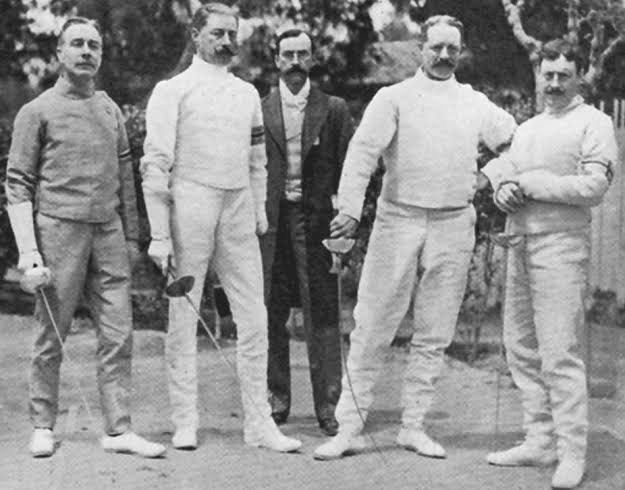
Derek Evered, who has died at the remarkable age of 100, lived a life shaped equally by intellectual rigor and quiet, steadfast passion. To those who knew him, he was not only a distinguished biochemist but also a gentle, patient fencing coach who poured nearly five decades of his life into nurturing a sport and a community he loved.
Derek’s working life began early. At just 14, he took a job as a hospital laboratory assistant, launching a scientific career that would lead him to become reader in biochemistry and deputy to the professor at the former Chelsea College of Science and Technology, now part of King’s College London. His academic achievements were many: more than 125 research papers in renowned journals such as the Lancet and the BMJ, visiting posts in Zurich and Cambridge, and the founding of Chelsea’s master’s course in biochemistry. Over his career he supervised more than 500 dissertations, leaving an enduring imprint on generations of young scientists. His research focused on amino acids and inborn metabolic disorders, including work on Hartnup syndrome.
Born in Lewisham, south-east London, Derek was the middle of three sons of Alfred Evered, a textbook salesman, and Elsie (née Wickerson). After his mother died when he was nine, Derek and his brothers were raised by aunts. He attended school in Southgate, north London, and continued his education in night classes while working in the laboratory. Called up for military service during the war, he failed the medical exam due to poor eyesight, scoliosis, and being underweight a twist of fate that would help steer him toward fencing. He discovered the sport almost by accident after watching a session in the basement of Regent Street Polytechnic, following his rifle practice.
From the late 1950s onward, fencing became his abiding passion. In 1976, alongside his friend Derek Freeborn, he founded Egham Fencing Club in Surrey, a short drive from his home in Ashford. For nearly 50 years he served as its chief coach and president, guiding hundreds of fencers with unfailing patience, a warm smile, and his gentle reminder “Littly social, littly social” borrowed from his own Hungarian coach, Bela Imregi, whenever conversation began to overshadow practice.
His love of words matched his love of the blade. A voracious reader, he devised a discreet system of marking library books to avoid rereading them by mistake. He devoured Napoleonic-era adventure novels as enthusiastically as scientific papers. Forced into early retirement at 59 due to university cuts, he turned fully to fencing. He wrote a manual on sabre and, for 28 years, contributed meticulously proofread columns to The Sword, British Fencing’s magazine. He also created and edited Egham Fencing Club’s spirited quarterly journal, Cut and Thrust.
Derek’s devotion extended deeply into his personal life. He married Evelyn (née Purssey) in 1954 after meeting her on a coach trip to France. She died earlier this year. He is survived by their children Angela, Graham and John, who cared for him full time during his last decade and by three grandchildren: John, Sarah and Jamie.
To the end, Derek asked after his fencers, his club, and the sport that shaped so much of his life. His advice in later years was delivered with a wry smile: “Don’t get old.” Yet Derek himself showed that age need not dim curiosity, kindness, or passion. He lived all his days with grace measured not only in scientific achievement, but in the quiet elegance of a life devoted to others.