

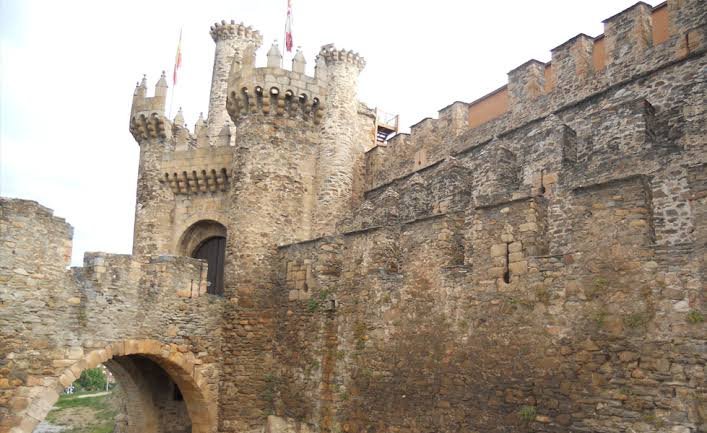
The Reconquest of the Iberian Peninsula (722–1492), which lasted for a large portion of the Middle Ages, is closely associated with the Spanish castle. The fortifications of Castile were home to soldiers, strategically placed in difficult-to-attack locations, and crucial components in the conflict between Christians and Muslims, in contrast to other European kingdoms where they served as stately residences. Because of their border aspect throughout the Middle Ages, more castles were built in areas like Aragón, Castilla, Navarra, or Aragón.
Naturally, the Camino de Santiago is also lined by these striking defensive fortifications. The Templars, who provided protection to the pilgrims traveling the French Way (and whose legacy continues to this day), were present during the medieval era when the Jacobean route was established and flourished, amid the never-ending military conflicts between the Christian countries and the Muslims. Although some of these fortresses have been lost over the ages, the north of the peninsula still has several of these constructions that we may see while exploring some of the Jacobean routes, such as the French Way or the Vía de la Plata.